Tea cultivar
Okumidori matcha
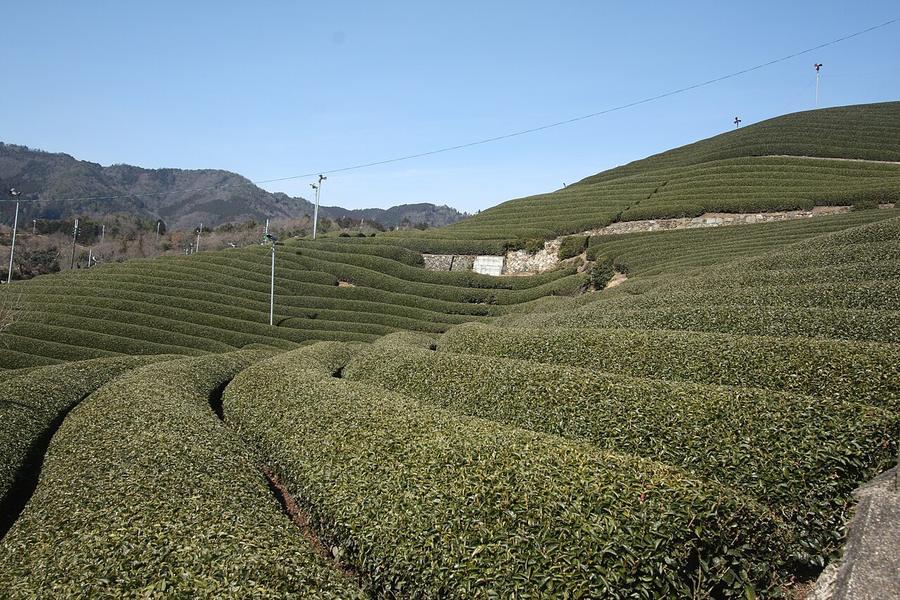
Okumidori is a late-budding cultivar widely used for matcha and gyokuro. "Late-budding" means its spring shoots open later than Yabukita's, so it is harvested later in the season.
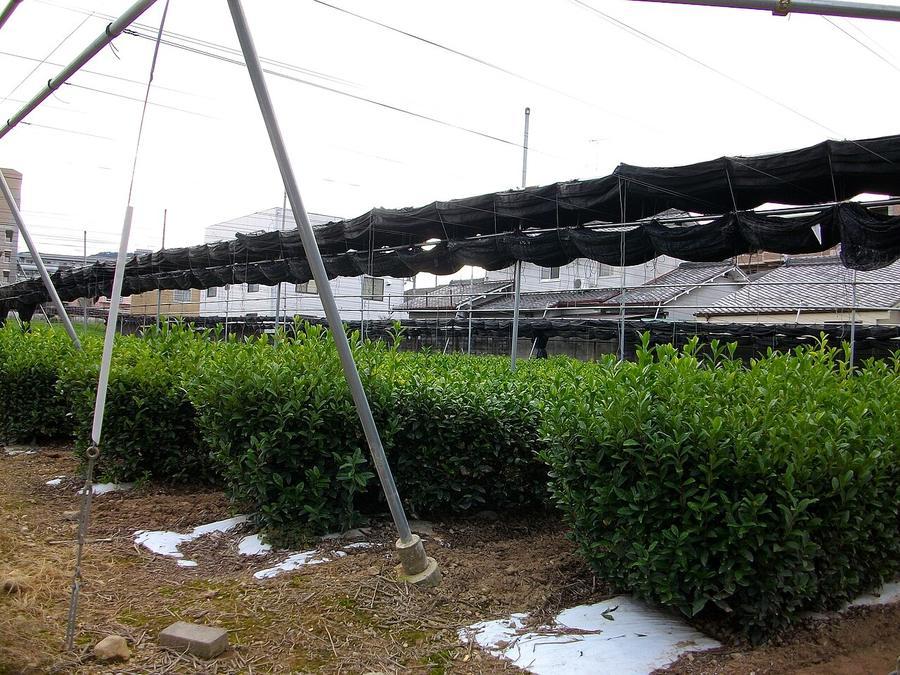
Producers and sellers commonly describe it as umami-forward, with a deep green color and little bitterness, and say it takes shading well. Treat these as descriptions rather than measurements: how a matcha tastes depends as much on shading, harvest and milling as on the cultivar.
Profile
- Budding
- Late, after Yabukita
- Common uses
- Matcha (tencha) and gyokuro
- Typical description
- Umami-forward, deep green color, low bitterness
Background from published sources, which sometimes differ in detail: Unearthed Gallery: Okumidori matcha; Premium Health Japan: guide to matcha cultivars.
Background
- Parents
- Yabukita (mother) × Shizuoka native selection No. 16 (Shizu-zairai 16)
- Bred at
- The national tea research station at Kanaya, Shizuoka (now part of NARO)
- Registered
- 1974, as Tea Norin No. 32
- Budding
- Late: about 11 days after Yabukita; harvest opens about 8 days after
- Share of Japan's tea area
- About 3.3 percent (MAFF survey, 2020), fourth after Yabukita, Yutakamidori and Saemidori
- In Kyoto
- The second most planted cultivar in Kyoto Prefecture, about 12 percent of its tea area
Background from published sources, which sometimes differ in detail: Tealife Japanese Tea Pedia: Okumidori; Yagi, Univ. of Hawaii CTAHR: Characteristics of Eight Japanese Tea Cultivars (2010).
Where it is grown
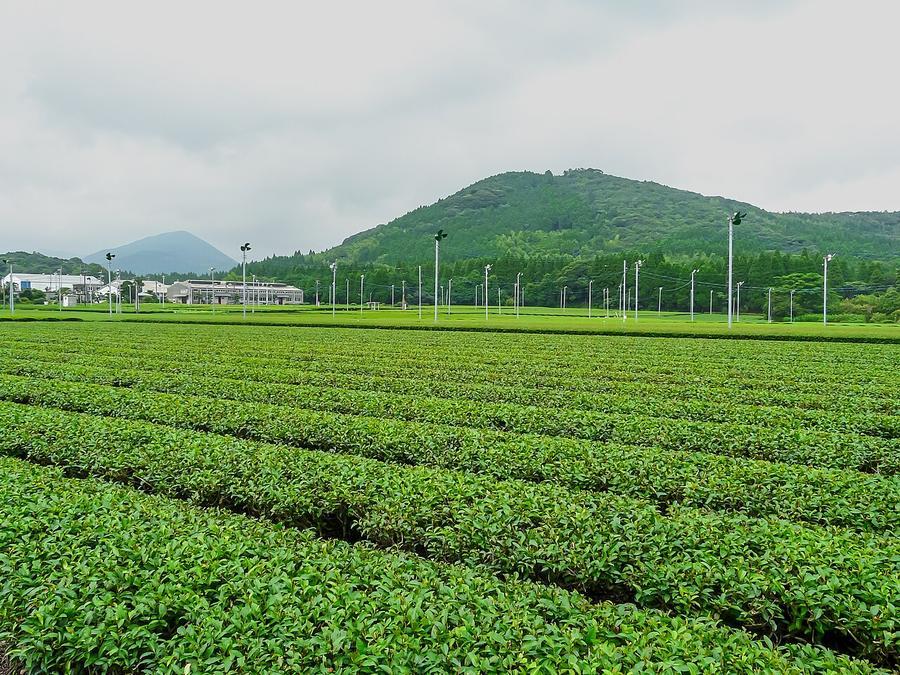
Mainly Kagoshima, Mie and Kyoto (Uji and Wazuka), with some in Aichi, Fukuoka and Saga.
Pins show the growing regions that brands name on their product pages for Okumidori matcha, sized by how many products. They show where the leaf is grown, never where a company is based.
83
plain matcha powders naming Okumidori
48
brands
$35.00
median per 30 g (all matcha $32.87)
$27.40–$45.00
middle half of prices
By grade (as each brand labels it)
| Grade | Products | Median / g | Middle half |
|---|---|---|---|
| Ceremonial | 55 | $35.00 | $27.07–$44.75 |
| Not stated | 11 | $34.00 | $25.91–$41.00 |
| Koicha | 9 | $44.00 | $35.00–$54.00 |
| Usucha | 7 | $34.00 | $25.32–$48.75 |
By growing region
| Region | Products | Median / g | Middle half |
|---|---|---|---|
| Uji | 23 | $39.00 | $34.60–$53.50 |
| Kagoshima | 21 | $30.00 | $22.50–$38.95 |
| Yame | 11 | $34.20 | $28.44–$47.50 |
| Kyoto | 9 | $37.05 | $21.11–$45.00 |
| Shizuoka | 8 | $33.15 | $21.60–$43.20 |
| Wazuka | 5 | $28.00 | $20.63–$36.90 |
| Nishio | 2 | $38.13 | $30.94–$45.31 |
Brands naming this cultivar (up to eight)
| Brand | Products | Median / g | Middle half |
|---|---|---|---|
| Nio Teas | 9 | $34.20 | $17.32–$37.05 |
| Wakokoro Tea | 7 | $21.88 | $16.25–$23.75 |
| Rocky's | 5 | $42.00 | $42.00–$50.40 |
| Tezumi | 5 | $54.00 | $46.80–$54.00 |
| FKRŌ Matcha | 4 | $31.40 | $27.65–$35.40 |
| Nami Matcha | 3 | $43.00 | $38.60–$43.50 |
| Azuma Tea Garden | 3 | $44.72 | $30.80–$47.79 |
| Chikiriya Tea House | 2 | $60.00 | $56.50–$63.50 |
Rows with fewer than three products (two for regions, one for brands) are left out. “Middle half” is the per-30 g price range from the 25th to the 75th percentile. 43% of these powders are listed as organic.
Flavor notes brands report
Share of Okumidori powders with reported flavor notes that mention each one.
Okumidori matcha from well-known brands
One product per brand first, in order of brand recognition.

 Hoshino SeichaenYame no Hanaujichamatcha.com
 Mizuba Tea CoOkumidori Matcha Green Teamizubatea.com
 Rocky'sOsada Ceremonial Blendrockysmatcha.com
 TezumiHaruto - Organic Tenryu Matchatezumi.com
 Chikiriya Tea HouseTenaraikyo-chikiriya.shop


Common questions
What does Okumidori matcha taste like?
Among Okumidori matcha whose brands report flavor notes, the most common are umami (73%), sweet (63%), rich (54%). Flavor depends as much on shading, harvest and milling as on the cultivar, so treat this as a guide to what brands say, not a guarantee.
Is Okumidori used for ceremonial or culinary matcha?
Of 83 plain Okumidori matcha powders in the database, 55 ceremonial, 11 with no grade stated, 9 koicha, 7 usucha. Grades are the labels brands choose, and there is no official standard behind them.
Where is Okumidori matcha grown?
Brands that name a growing region for Okumidori matcha most often name Uji (23), Kagoshima (21), Yame (11), Kyoto (9). This is where the brand says the leaf was grown, as stated on its own product page.
How much does Okumidori matcha cost?
Across 83 Okumidori matcha powders from 48 brands, the median is $35.00 per 30 g and the middle half fall between $27.40 and $45.00, above the $32.87 median for all matcha powders on the site.
1 study in the research library mentions Okumidori. Read them→
How these numbers were made
Counts and prices cover plain matcha powders whose own product page names Okumidori: flavored blends, tea bags, sweetened mixes, packs under 20 grams and products without a verified price are excluded, and only brands that ship to the United States are included. A blend of several cultivars is counted once, under the first cultivar found on its page. Prices are converted to US dollars and shown per 30 g. Descriptions of a cultivar's character come from published sources and sellers; we do not taste or rank products.